
How to Log In to Fortunica Casino UK: A Step‑by‑Step Guide
Fortunica Casino UK is a relatively new player in the online gambling scene. The brand markets itself as a “full‑service” casino, offering slots, table games, live dealers, and a mobile app. If you’re already a UK player looking for a fresh experience, the first hurdle is getting onto the site and logging in.
Getting Started: The Fortunica Login Process
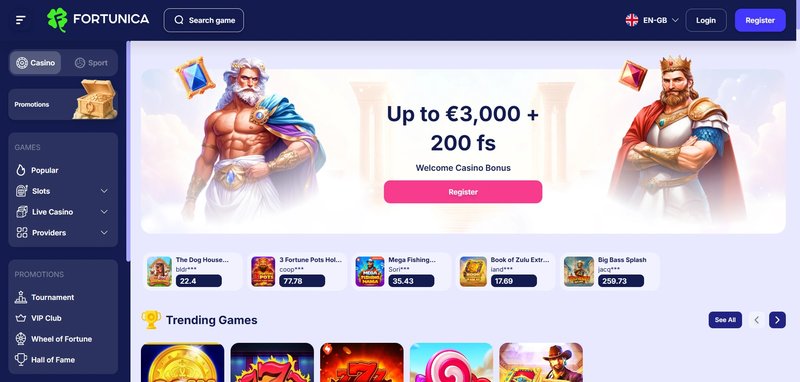
To access the casino, you’ll first need to visit the Fortunica official website at fortunica.com. From the homepage, click the “Login” button in the top‑right corner. A drop‑down menu appears with two options: “Login” and “Register.” If you already have an account, simply enter your username and password. New users should select “Register” and complete the short form with an email address, a chosen password, and a country selection.
Once registered, you’ll receive a confirmation email. Click the link inside to verify your account. After verification, return to the login page and enter your credentials again. If you prefer a mobile experience, the Fortunica casino login app is available on both iOS and Android. Download the app, open it, and use the same credentials you set up on the desktop site.
What the Site Offers After You Log In
After logging in, you’ll notice a dashboard that lists your balance, pending bonuses, and recent activity. Fortunica’s game library is dominated by slot titles from NetEnt, Pragmatic Play, and Play’n GO, amounting to roughly 200 games. Table game enthusiasts will find five variants of blackjack, three types of roulette, and a handful of poker tournaments. The live casino section is powered by Evolution Gaming and includes a live blackjack table that opens every 15 minutes.
Fortunica also offers a “free play” mode for new users. By selecting the “Fortunica casino login free play” option, you can test select slots with a virtual bankroll of £10,000. This is handy if you’re unsure about a game’s volatility before risking real money.
Pros and Cons: A Real‑World Perspective
Pros:
- Fast withdrawals: Bank transfers and e‑wallets clear within 24 hours.
- Mobile‑friendly: The app mirrors the desktop experience with no lag.
- Regular promotions: New players receive a 100% deposit bonus up to £200, plus 200 free spins.
Cons:
- Limited payment options: Only Visa, MasterCard, Skrill, and Neteller are accepted.
- Restricted country list: Players from Ireland and the Isle of Man cannot sign up.
- Customer support: Live chat is only available during UK business hours (8 am–8 pm).
For a quick way to start playing, click Fortunica login and follow the steps above. This single link will take you directly to the login page, saving you a few extra clicks.
Security and Responsible Gaming
Fortunica uses 256‑bit SSL encryption to protect user data. All transactions are processed through licensed banking partners, ensuring compliance with UK Gambling Commission standards. The site also offers self‑exclusion tools and deposit limits that can be set on a weekly basis. If you notice any suspicious activity, you can contact support via email or the chat widget.
Final Thoughts
Logging into Fortunica Casino UK is straightforward, with a clear path from registration to first spin. The platform delivers a solid selection of games, competitive payouts, and a user‑friendly mobile app. However, the limited payment methods and restricted country list may deter some players. If you’re looking for a reliable UK casino with fast withdrawals and a generous welcome bonus, Fortunica is worth a try. Just remember to read the fine print and set a budget before you start betting.
What You’ll Get
By the time you finish this piece, you’ll know exactly how 5G bandwidth and latency are turning mobile gaming from a casual pastime into a high‑stakes, real‑time experience. You’ll also see where the technology still lags and how developers are coping.
1. 5G’s Two‑Fold Advantage
First, 5G delivers peak speeds of up to 10 Gbps—roughly 25 times faster than 4G LTE. That means a 200‑megabyte texture pack can download in under 2 seconds on a good connection. Second, latency drops to 1–5 ms. For competitive shooters, that translates to a reaction time that feels instantaneous, not delayed.
2. Game Design Shifts
Because data can move faster, developers are now designing games with higher resolution assets and larger worlds. A 2024 title, Skybound Arena, uses 4K textures on a phone, something that would have been impossible two years ago. The lower latency also lets developers implement real‑time physics simulations that react instantly to player input, giving a smoother feel.
3. Streaming and Cloud Gaming
5G makes cloud gaming viable on mobile. Services like StreamPlay can stream a 1080p, 60 fps game with less than 50 ms lag. That’s comparable to a console experience, but on a device you already own. However, the catch is that the service requires a stable, high‑speed connection at all times; a sudden drop to 4G can freeze the game for several seconds.
4. Monetization and In‑Game Purchases
Higher bandwidth lets developers push more dynamic content, such as live events or multiplayer tournaments that run for hours. This opens up new revenue streams: timed passes, real‑time leaderboards, and in‑game advertising that can be refreshed every minute. Players now see ads that are context‑aware, reducing the annoyance factor that plagued earlier mobile ads.
5. Common Mistake: Ignoring Edge‑Location
Many developers assume that 5G will automatically provide a flawless experience everywhere. In reality, coverage varies widely. Urban areas often have multiple 5G nodes, but rural regions may still rely on 4G or even 3G. If your game’s server is located far from a user’s nearest 5G tower, latency can spike to 20–30 ms, erasing the advantage.

6. The Human Factor
Players are more tolerant of longer load times if the gameplay feels smooth. A 3‑second delay before a match starts is acceptable if the in‑game actions feel immediate. However, any lag that occurs during critical moments—like a last‑second dodge—can ruin immersion.
7. Future Outlook
By 2027, we expect 5G to be ubiquitous in most developed markets, pushing average speeds to 15 Gbps. That will enable even more complex games, like fully rendered VR experiences on a phone. Yet, developers must continue to optimize for lower‑bandwidth scenarios, ensuring that casual players aren’t left behind.
Mobile gaming’s surge is not just a trend; it’s a shift in how we interact with digital worlds. The combination of lightning‑fast speeds and near‑zero latency is already redefining player expectations. If you’re a developer, focus on optimizing for edge cases. If you’re a gamer, keep an eye on your network quality—your experience depends on it.
For those who love both gaming and other forms of online entertainment, a quick look at www.mrfrancisgardner.co.uk shows how the same principles of speed and responsiveness apply across platforms.
Frequently Asked Questions
What advantages does 5G bring to mobile gaming?
5G offers peak speeds up to 10 Gbps and latency as low as 1–5 ms, enabling faster downloads and smoother real‑time gameplay.
How does 5G affect game download times?
With 5G, a 200‑MB texture pack can download in under 2 seconds, dramatically reducing wait times compared to 4G.